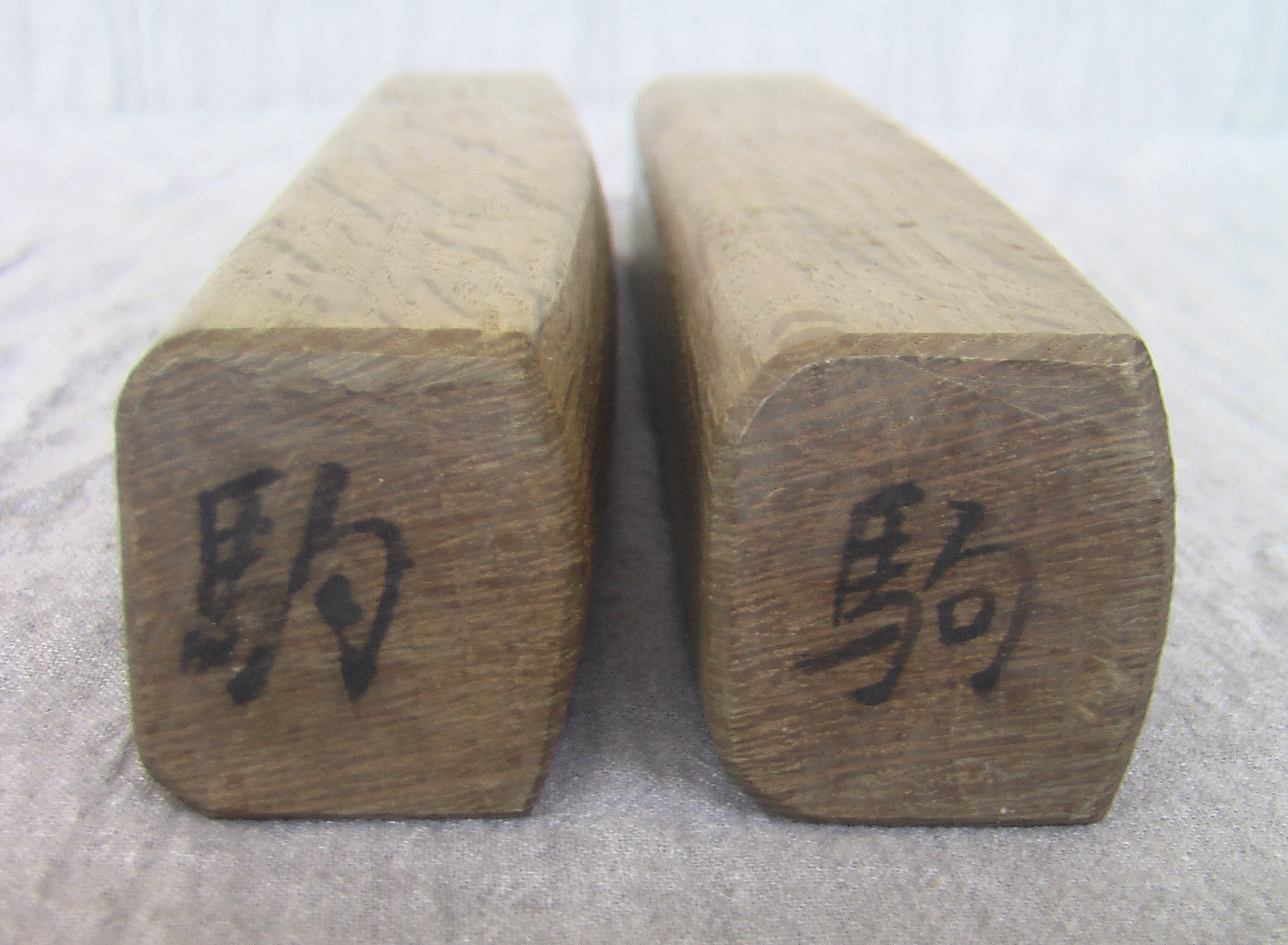
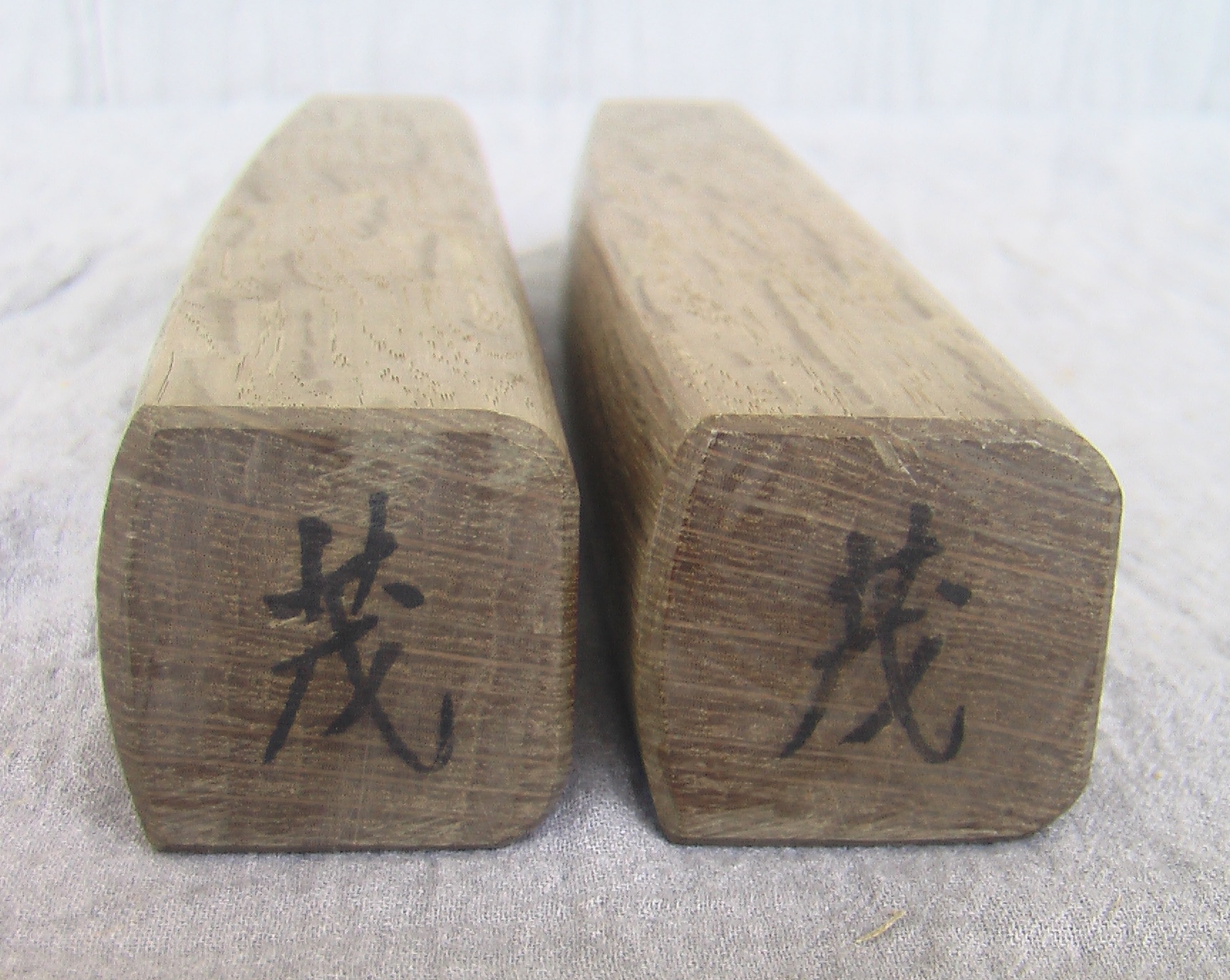
hyoshigi
Also: hyōsigi hyoshige
Contextual Associations
The hyoshigi is a concussion idiophone of the Japanese people of Japan. It is a sound effects instrument used in the kabuki theatre of Japan to “signal performers and stage personnel and to indicate the opening and closing of the curtain.” (Motegi, p. 659). It is considered an instrument developed specifically for the kabuki theatre, but it is also found outside of this context where it is used by night watchmen, fire watchers, and candy salesmen (Malm, p.225; Marcuse, p.255).
Description
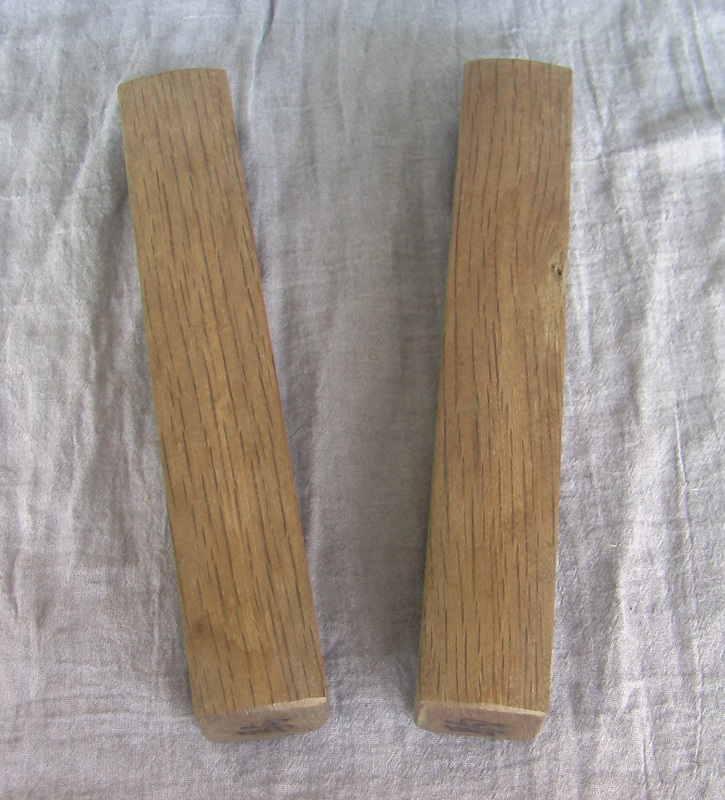
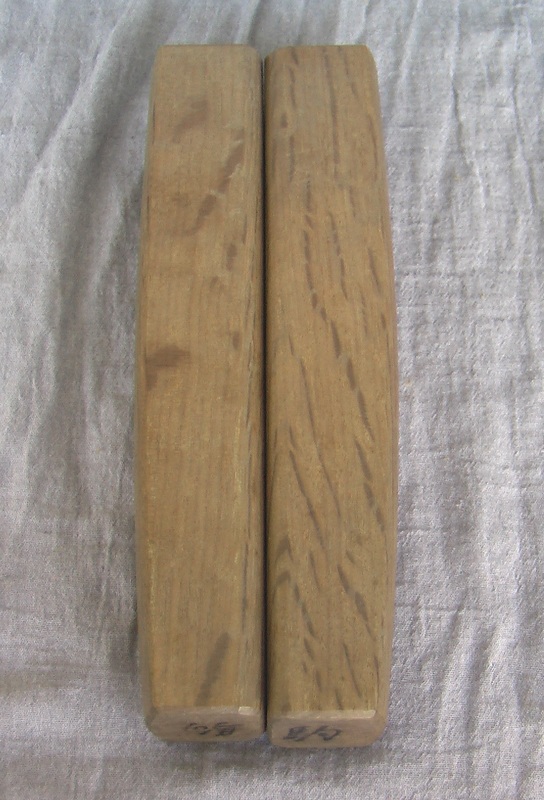
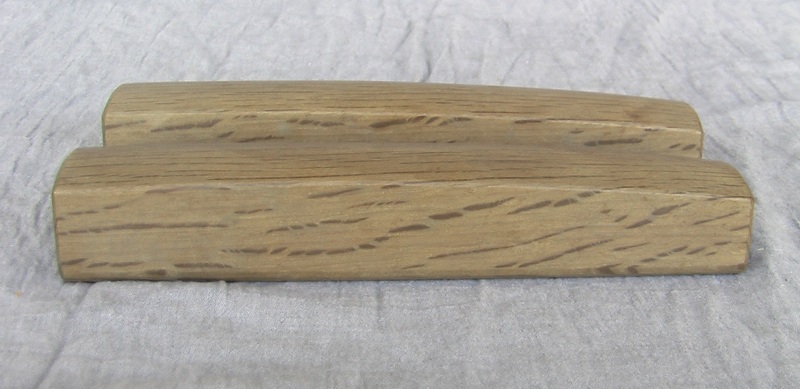
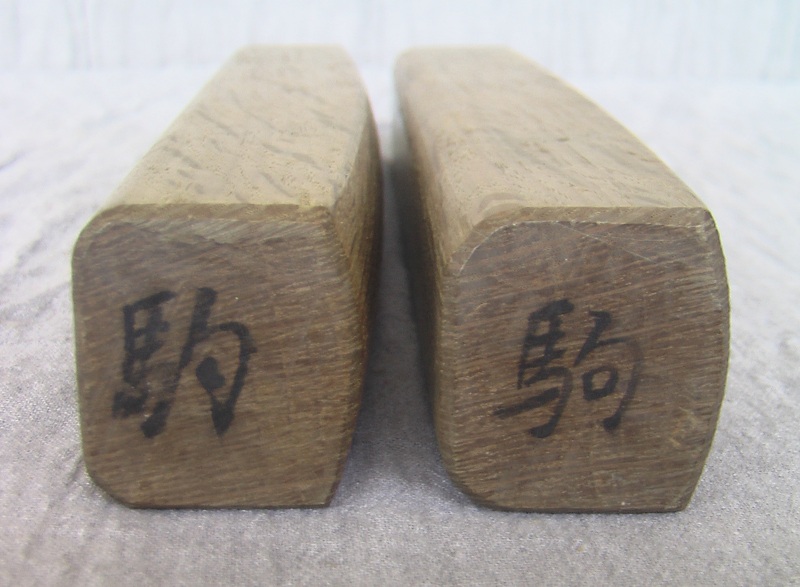
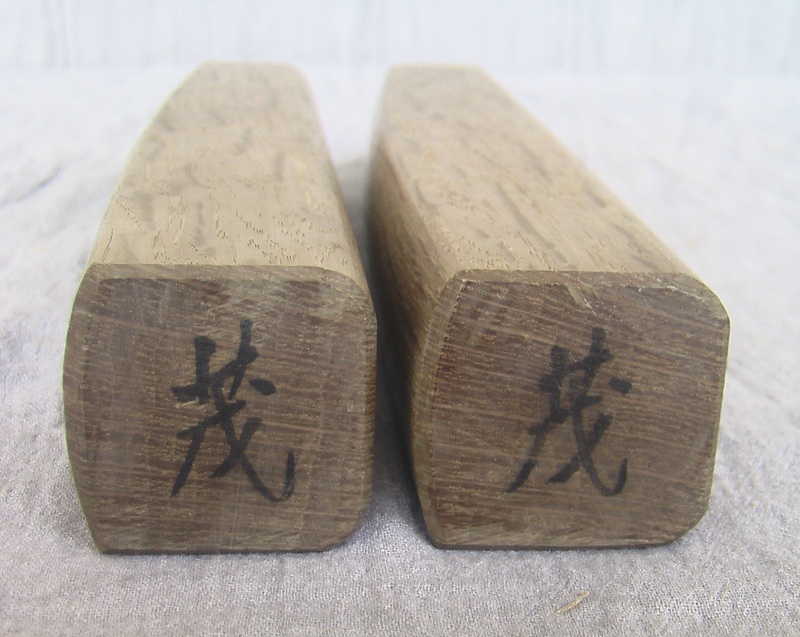
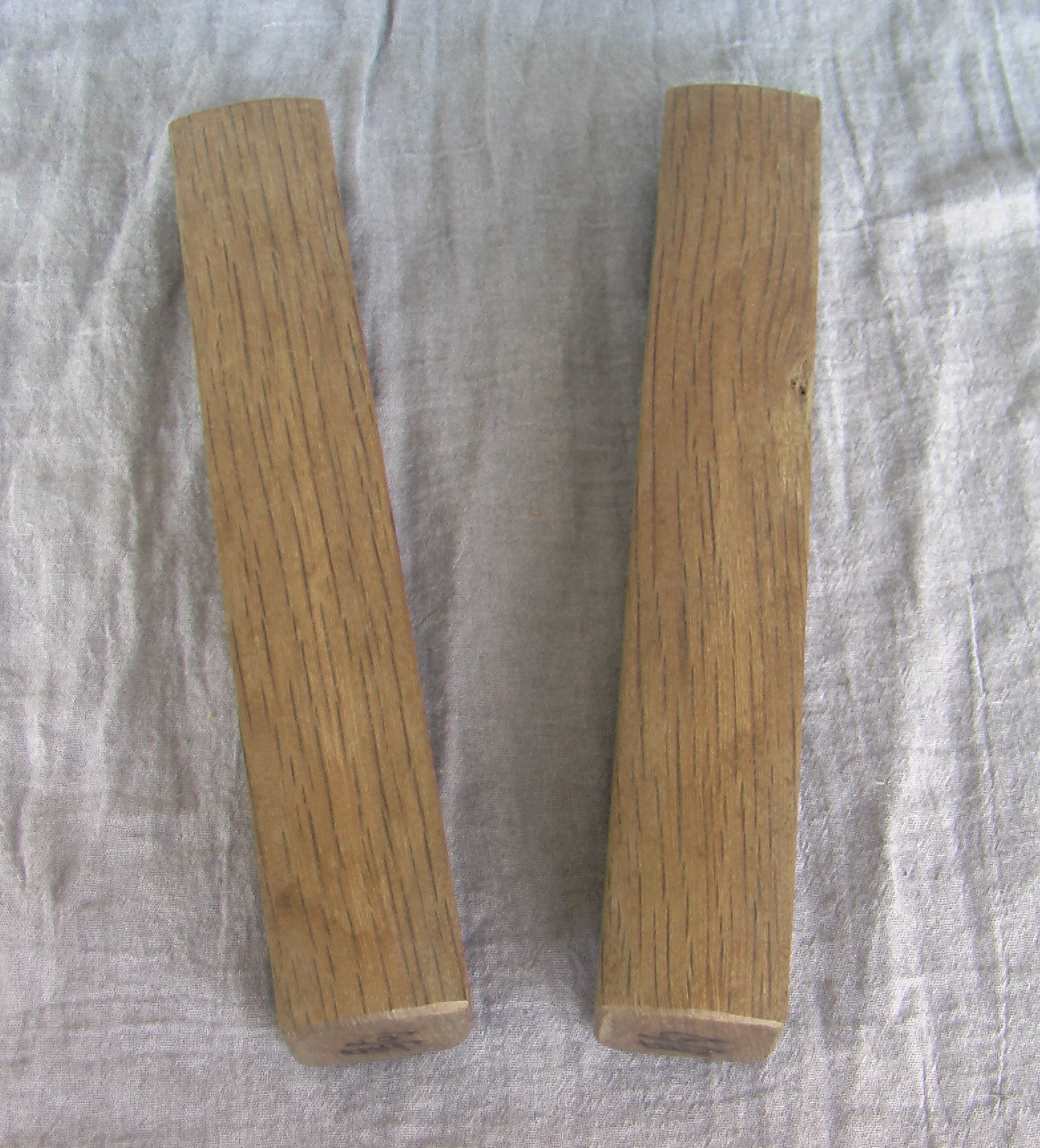
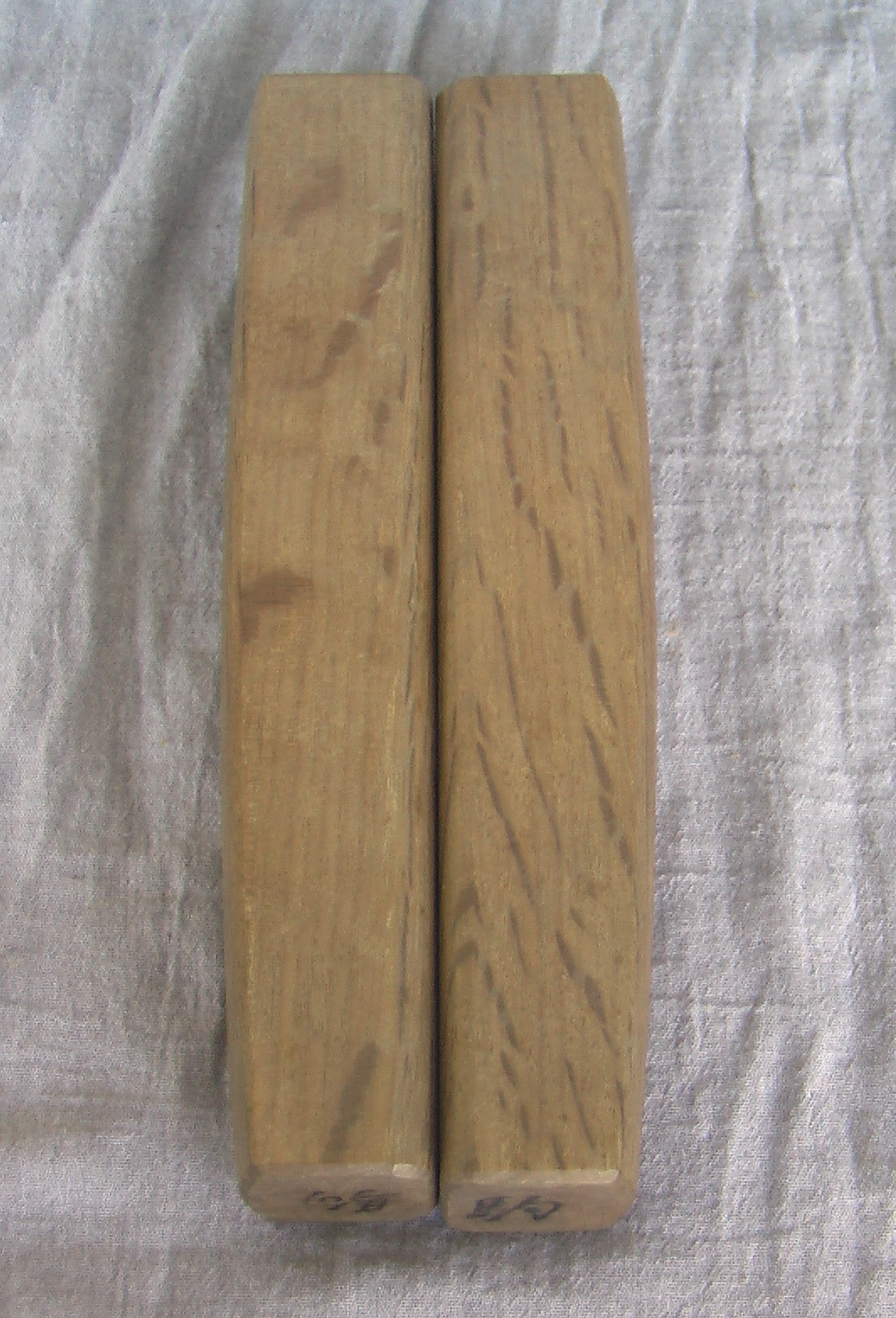
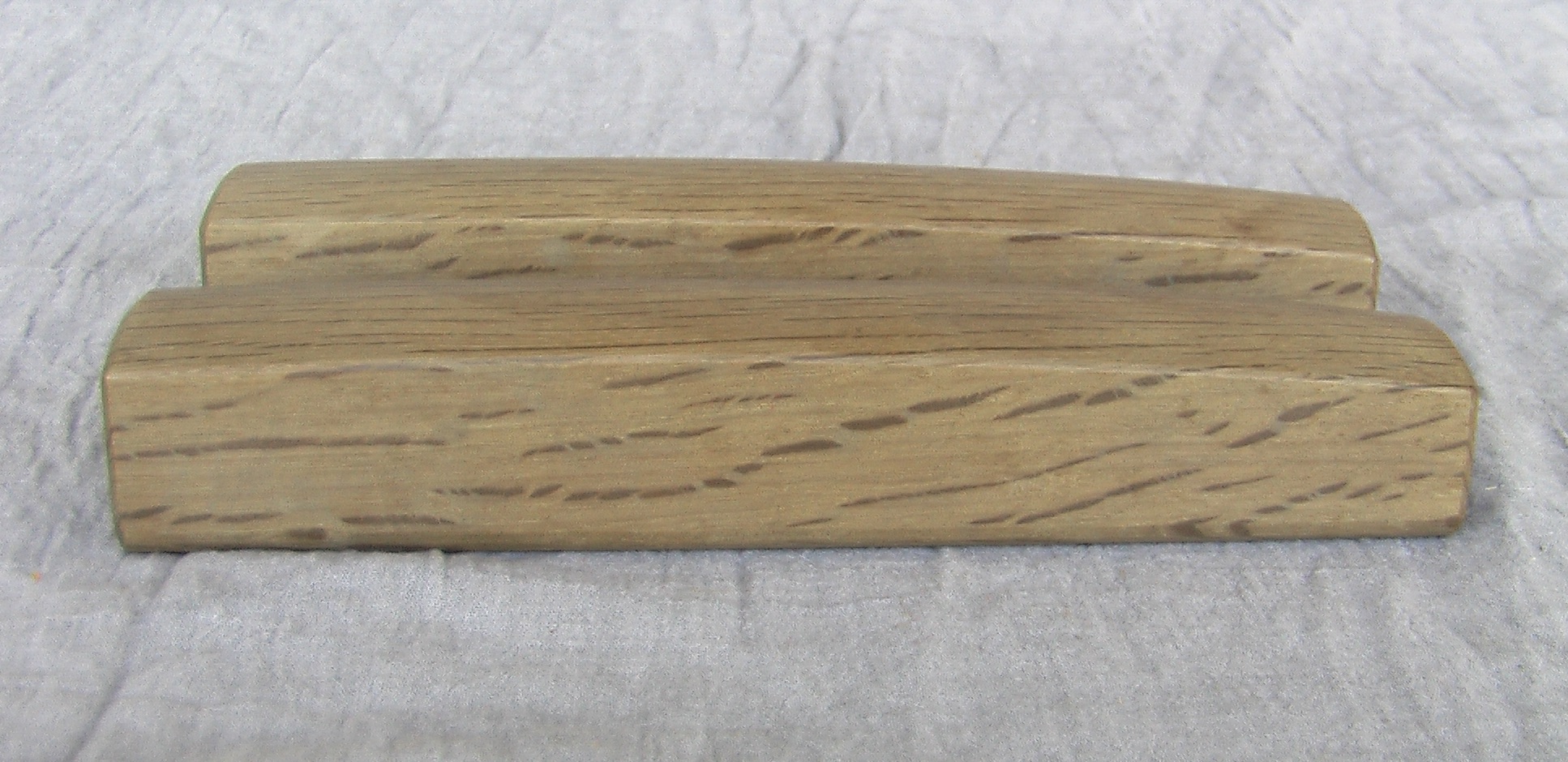
The hyoshigi is comprised of two identical solid rectangular blocks of an unknown variety of hardwood (gallery #1). One of the wider faces of each block is absolutely flat (detail #1), and it is these two faces that are concussed against one another. The opposite face of each block is slightly arched (detail #2). The end of each block is marked with a Japanese character, a different one at each end (see details #3 and #4)
Player - Instrument Interface and Sound Production
The hyoshigi is sounded in two ways in kabuki performances: 1) as concussion clappers used a) pre-performance to count down the minutes to the start of the performance, and b) to accompany the opening and closing of the stage curtain and to precede any dramatic poses struck by lead characters during a performance; and 2) as percussion sticks pounded against a non-sonorous wooden board resting on the stage to accentuate fight scenes. In both cases, one block is held in each hand by the stagehand known as the kyogen-kata (Malm, p.224).
Origins/History/Evolution
Other than Motegi stating that the hyoshigi is “an instrument developed specifically for the kabuki theatre,” our sources provide no other information about the origin of this instrument. It is possible that the instrument’s use outside of the kabuki theatre predated its introduction to that context, but no sources were found that state this.
Bibliographic Citations
Malm, William P. 1959. Japanese Music and Musical Instruments. Rutland, Vermont: Charles E. Tuttle Company.
Marcuse, Sibyl. 1964. Musical Instruments: A Comprehensive Dictionary. Garden City, New York: Doubleday & Company, Inc.
Motegi Kiyoko. 2002. “Theatrical Genres: Kabuki.” In The Garland Encyclopedia of World Music v. 7. East Asia. ed. Robert C. Provine, Yosihiko Tokumaru, and J. Lawrence Witzleben. New York: Routledge, pp. 657-661.
Piggott, Sir Francis. 1971 [1909]. The Music and Musical Instruments of Japan. Unabridged reproduction of the 1909 second edition. New York: Da Capo Press [1909 second edition: Yokohama: Kelly and Walsh, Ltd.]
Instrument Information
Origins
Continent: Asia
Region: East Asia
Nation: Japan
Formation: Japanese
Classification (Sachs-Von Hornbostel revised by MIMO)
111.11 idiophone--concussion sticks or stick clappers: two or more are struck against each other
Design and Playing Features
Category: idiophone
Energy input motion by performer: clapping; stamping
Basic form of sonorous object/s for idiophone: block - oblong bar
Sound objects per instrument: two sounded collectively
Resonator design: no resonator
Number of players: one
Sounding principle: concussing – direct; stamping/pounding
Sound exciting agent: colliding sonorous objects; collision with non-sonorous object
Energy input motion by performer: clapping; stamping
Pitch of sound produced: indefinite pitch
Sound modification: none
Dimensions
8.9 in. length
1.3 in. width
1.45 in. height
Primary Materials
wood
Entry Author
Roger Vetter